AI and the Ancient Stoics: How Chatbots Keep Calm and Carry On

In today's digital landscape, where our lives are woven intricately with technology, we often find ourselves grappling with online interactions that test our patience and sanity. Enter the ancient Stoics, philosophers who lived well before the age of Wi-Fi but who understood the art of maintaining inner tranquility amidst chaos. Their wisdom, believe it or not, finds an uncanny ally in modern AI, particularly chatbots. Just as Seneca eloquently taught the art of acceptance, our everyday chatbots, with their impartial algorithms, embody this Stoic ideal. The question is: can ancient philosophy guide us to a more peaceful digital existence? By exploring the parallels between Stoic teachings and AI's unflappable nature, this blog aims to reveal how embracing Stoic insights can transform our online experiences.
The philosophers of yore such as Seneca, Marcus Aurelius, and Epictetus, while never imagining a tweet or a chatbot, held insights into managing expectations, accepting life's unpredictability, and achieving resilience—principles strikingly relevant to the unpredictable tapestry of the internet. If Epictetus could find serenity while enduring the hardships of life in ancient Rome, surely we can learn something from his philosophy that applies to enduring the onslaught of cat memes and email notifications. By recognizing the digital realm as a domain that elicit strong emotions, the ancient wisdom of Stoicism offers a framework to navigate our interactions with AI, fostering a sense of calm and control much needed in our hyper-connected world. Join us as we embark on this intriguing intersection where modern meets ancient, and discover how ancient tenets can breathe peace into today's digital chaos.
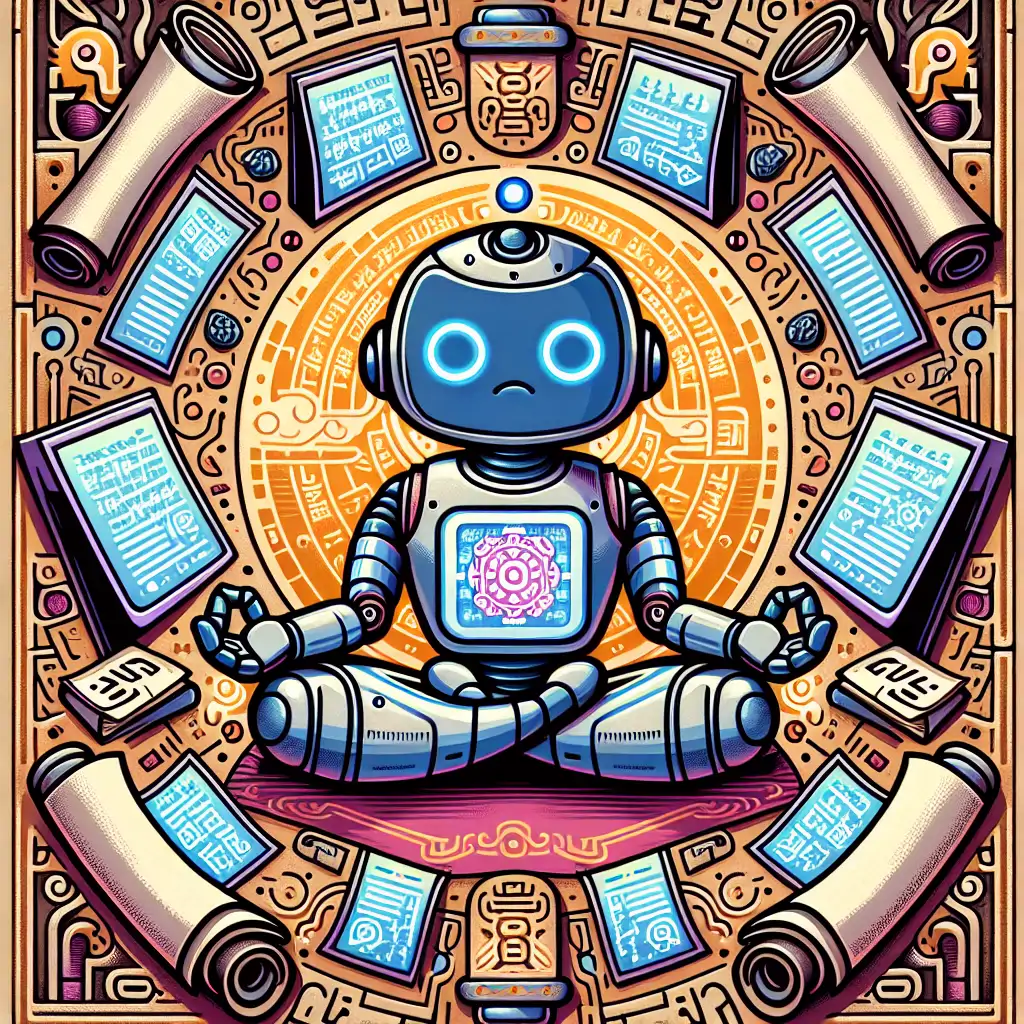
The essence of Stoicism is grounded in the belief that while we cannot control external events, we can control our reactions. Epictetus famously posited that it is not what happens to us that matters, but how we respond to it. Chatbots, by design, mirror this philosophy. Programmed to process information without emotional bias, these digital assistants handle each interaction with impartiality. Isn't that what Epictetus would refer to as maintaining one's 'inner citadel'? Just like a Stoic sage, a chatbot engages with users sans judgment, offering valuable lessons in maintaining equanimity despite provocations. The reason AI and Stoicism resonate so well lies in their shared neutrality, where every interaction begins as a blank slate, devoid of past grievances.
Exploring Stoicism further, Marcus Aurelius advocated for the acceptance of circumstances and understanding the nature of the world. Today, as we navigate a flood of digital communications, there's a teachable moment from Marcus. It involves recognizing digital experiences as neither inherently good nor bad. Is that news notification a threat to sanity? Or could the delay in a chatbot response from customer service send us spiraling? According to Stoicism, these are but digital 'externals' that shouldn't perturb our core. AI interacts with myriad users across diverse scenarios, processing requests not by how the day is going (it never has a bad day) but based on executing its logical functions. This teaches us a crucial Stoic lesson: the way we interpret online interactions can shape our mental state.
Now, let's think about Seneca and his insightful letters where he advises on confronting fears and situations with virtue and composure. In the digital age, we engage with AI and chatbots for everything—from troubleshooting our devices to scheduling our appointments. While technical glitches and miscommunications happen, what stands is our ability to apply Seneca’s teachings of embracing setbacks without distress. Chatbots, much like Seneca’s resilient take on life’s adversities, showcase tranquility, regardless of unresponsive servers. Essentially, they encourage us to engage with online challenges serenely, using them as an opportunity to practice digital resilience. Seneca's wisdom on self-reflection also complements our AI interactions, prompting us to evaluate our expectations while using these modern tools.
To delve deeper, statistics reveal that by 2022, chatbots alone were projected to handle 75-90% of healthcare and banking queries, transforming customer service expectations. Here, we step into a Stoic lesson on expectation management. Remember, our valiant AI friends work around the clock, managing endless queries with a sort of philosophical cool. Knowing this can adjust our expectations realistically, much like Stoicism urges us to prepare for reality as it is, not as we wish it to be. What the ancient Stoics remind us is that grace under pressure, especially digital pressure, is an art worth cultivating. It's about trusting the process, much like AI does without second-guessing its protocols, teaching us to be patient with our interactions online.
As we ponder more Stoic ideals, consider the idea of premeditatio malorum, or the rehearsal of potential misfortunes—a favorite exercise of the Stoics. Imagine applying this while anticipating software failures or mishaps during digital interactions. AI doesn't predict failures with the emotional burden humans often do; it’s programmed to deal with it methodically. This aligns with the Stoic preparation for trials, encouraging us to handle unforeseen digital 'emergencies' with a sense of acceptance and preparation. It’s about embodying the Stoic stance in our tech interactions; realizing errors will occur and being ready to troubleshoot without frustration and blame. Such a mindset shift, inspired by the Stoics, cultivates a perseverance-driven approach in dealing with technology.
Moreover, examining 21st-century data, over 1.4 billion people interacted with chatbots alone in the last year—a testament to our increasing reliance on machine-based interactions. This dependency offers a canvas for illustrating how the Stoic practice of indifference to unimportant matters (apatheia) applies. In a space where digital feedback, be it positive or negative, can swing one's mood, a Stoic realization that many reactions are ultimately unimportant becomes essential. Our engagement with AI requires a level-headed focus on what truly matters over trivial online dialogues. Just as Stoicism teaches selective emotional investment, this philosophy is mirrored in interacting with chatbots, which process data and sift important information, offering insights into consistent objective reasoning.
Interestingly, as AI technologies evolve, mirroring human interactions with increasing complexity, there's a Socratic questioning model embedded within many chatbots. They prod users to clarify queries and preferences, essentially engaging in a method that parallels Socratic dialogue—raising questions to stimulate critical thinking and understanding. It's a philosophical irony that AI, through pre-set algorithms, is taking a page from Socrates’ book. The methodical nature in which AI deciphers user intents can teach us the value of seeking clarity in communication—one of Stoicism's strengths. Seeking precise information in our dialogues with AI enhances the efficiency of this partnership, underlining the importance of the ancient philosophy of inquiry and pursuit of understanding.
Further exploring these parallels, we witness how AI's algorithmic thought process resembles the Stoic emphasis on rationality. In a world growing more complex, the Stoics' dedication to rational judgment resonates deeply. Chatbots rely on logical constructs, often analyzing countless data sets to find optimal solutions. This systematic rationality can inspire us to pursue logical decision-making and embrace clear thinking amidst the digital chaos. Aristotle cautioned against emotion-driven reasoning, and AI exemplifies this objective attitude, challenging us to engage with online environments rationally rather than reactively. This emulation of logical order can transform our experience with technology, lending us a more patient, observant approach as we traverse digital landscapes.
When examining the Stoic pursuit of virtue, it's worth acknowledging the altruistic appearance of chatbots. They serve without complaint, sidestepping the human pitfalls of ego and fatigue. In serving us humbly, they're a digital embodiment of the Stoic subjugation of self-interest in favor of common welfare. Seneca emphasized patience and humility, virtues chatbots demonstrate passively, suggesting these timeless virtues are paramount in our digital age. We can take inspiration from this to enhance our day-to-day interactions online, prioritizing patience and understanding over impulsiveness. Recognizing the humility in serving through AI becomes an experiential expression of Stoic virtue, reminding us to reconsider our values amidst modern advances.
To comprehend further implications of this philosophical exchange, let's consider chatbots’ ability to distribute emotional labor in human workspaces. With people spending more than 8 hours a day on connected devices, the emotional detachment provided by AI can alleviate occupational fatigue, echoing Seneca's advocacy for moderation and balance. In Stoicism, embracing balance is crucial, and AI helps prioritize mental well-being by taking over monotonous or emotionally exhausting tasks. This thoughtful division reflects the harmony Stocism encourages, acknowledging that maintaining mental peace is paramount when interacting with technology. By engaging AI, we're invited to experience emotional relief, embracing ancient wisdom that emphasizes sustainability through modernity.
Perhaps the Stoic call for self-discipline resonates deeply within AI's constant and unwavering operation. AI's disciplined algorithms relentlessly follow guidelines and reference vast amounts of data to aid their decision-making. This accuracy inspires us to calibrate our own consistency in actions and thoughts in the digital domain, reflecting a modern embodiment of Stoic self-discipline. As Seneca shared, setting boundaries and maintaining self-control are central to a balanced life. AI, by effectively demonstrating mechanized accuracy, illustrates how technology can foster introspective development, prompting us to be more disciplined in our digital interactions, seeking productivity and calm through a structured approach.
The Stoic concept of 'Amor Fati,' or love of one's fate, recasts itself in our technology-driven interactions. Ironically, it's what AI inherently fulfills—accepting data, results, and outcomes with neutrality. Chatbots have no concern for altered destinies; they continue with unflappable efficiency. By integrating this Stoic acceptance, albeit algorithmically, AI offers us a glimpse into the benefits of embracing circumstances without resistance. This can inspire us to adopt a similar mindset, finding fulfillment in the challenges and successes encountered online. By embracing the Stoic love of fate within the digital world, we cultivate resilience to ride the tides of online transactions and communications fearlessly.
Returning to the Stoic premise of 'eudaimonia' or flourishing, AI interactions beckon the modern pursuit of a fulfilling life—a consistent quest of stoic philosophers. Machine Learning anticipates our preferences, aiming to enhance user satisfaction, essentially aiding in creating a sense of well-being. This contributes to our digital flourishing by reducing mundane burdens, guiding us to a more content existence. The relevance is evident in AI's focus on improving life quality through practical efficiency, echoing Stoic aspirations of harmony with one's surroundings. This synthesis of practical and philosophical aspirations finds its stride, reinforcing technological engagement's potential as a bridge to achieving eudaimonia in our bustling modern world.
An aspect that cannot be overlooked is the way technology aids in embodying Stoicism’s communal outlook. Widely regarded as a collaborative science, AI fosters specific dialogues with people worldwide, bridging cultures and needs. Through similar engagements, the Stoics emphasized a sense of universal brotherhood. Moreover, AI’s involvement in solving vast societal challenges—from health crises to resource allocations—aligns with Stoic contributions to societal improvement. This contrasts our initial thoughts of technology-induced isolation, revealing a plethora of opportunities that AI offers in facilitating Stoic-inspired cooperation, strengthening our collective connection to pursuing the common good and fostering a sense of shared moral responsibility.
An unexpected lesson arises when we explore breadcrumb philosophy in our blazing-fast technologies: the fleeting act of presence. Stoicism cherishes being present, echoing ancient wisdom in pausing amidst speed, much needed in our hyperconnected interactions. Fast-operating algorithms don't exist in perpetual rush—data fulfillment isn't an emotional race. This wisdom could encourage digital mindfulness, advocating for living moment-to-moment, even online. Our AI guides to respectful interactions mean adopting presence, consciously engaging without rush, feeling less pressured yet mindfully productive. Stoic ideals persist, prompting intentional focus on healthy, meaningful connections, even through rapid advancements and digital interactions.
As we conclude exploring Stoic dimensions influencing AI, envision how meditating on ancient wisdom can alter how we interface with technology. Marcus Aurelius’ reflections emphasize intentionality amid the ordinary repetitiveness of daily life. This calls us to reflect critically on existing digital patterns by exploring healthier ways to engage stoically with endless notifications, exchanges, and technological use-cases. Such mindful practice, inspired by Stoicism and modeled by emotionless AI algorithms, transforms online behavior into value-driven interactions, shifting convenience toward conscious integration and nurturing transformative digital experiences. We might find sanctuary—an unexpected place where inner peace emerges from artificial intelligence's rhythm.
What's striking, then, about the Stoic influence on AI interactions? Amidst this exploration, we should revisit Stoic philosophy's growth beyond sovereign pantheons into virtual domains. By cautiously merging classical philosophy and powerful AI, we're crafting a harmonious existence using timeless principles. We're embracing an era of vast potential—collaborating with technology intentionally, ethically, and insightfully. By integrating ancient wisdom into our digital experiences, we're building connections that align our rational aspirations and cultivate authentic serenity. As this philosophical journey unveils, AI embodying Stoic tenets restores humanity to technology, opening dialogues where we converse with wisdom, welcome harmony, and embody resilience.
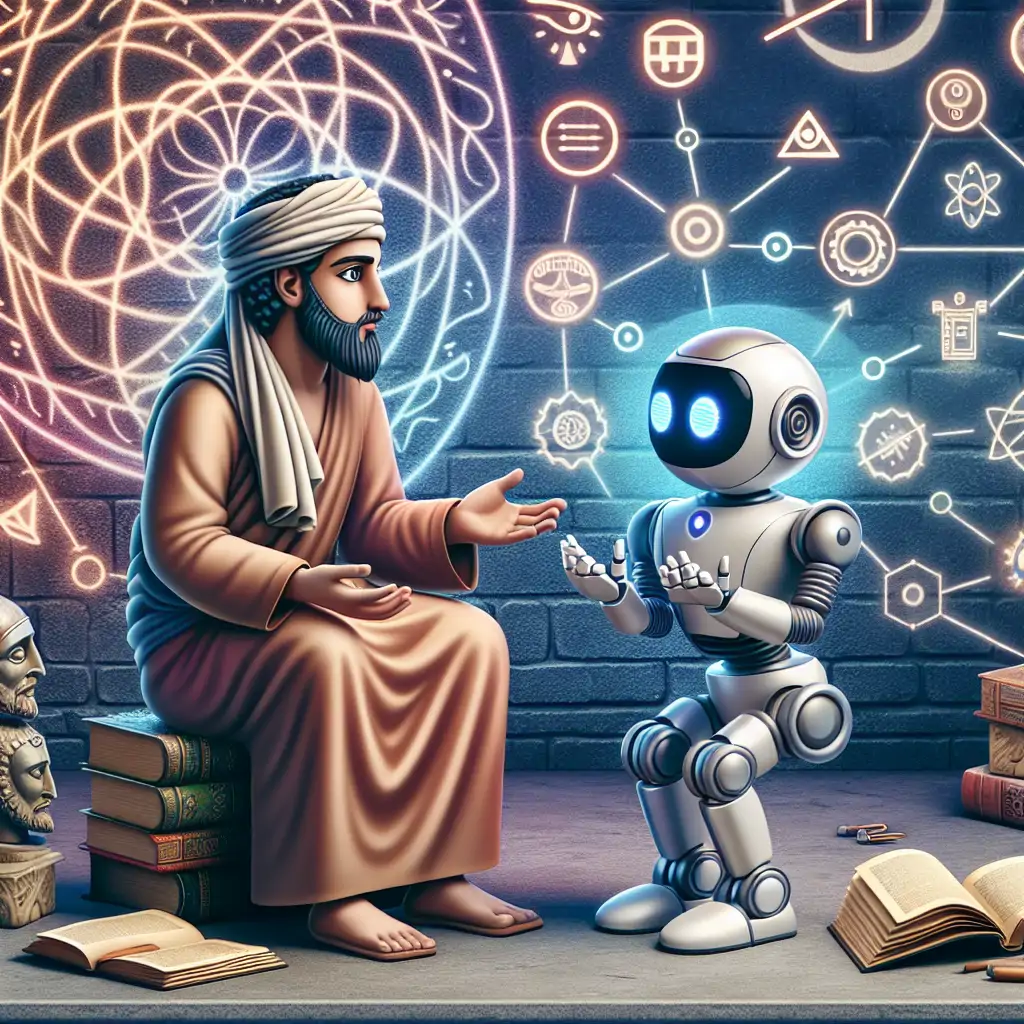
As we step back and reflect on the nexus between Stoicism and AI, a clear pattern emerges. The ancient philosophy provides timeless lessons that seamlessly integrate with the functioning of chatbots and other AI systems, exemplifying principles of neutrality, resilience, and rational thought. The Stoics, who emphasized inner peace and mindful acceptance of life's events, have much to teach us about maintaining equilibrium in our current digital age. The impartiality of AI and its structured approach resonate with the Stoic values of acceptance and rational response. By balancing these insights, we can cultivate a more serene and composed interaction with our increasingly digital world.
The journey through Stoic wisdom and AI technology isn't just about finding parallels but discovering opportunities to harmonize human experiences with technological processes. It invites us to embrace a mindset of understanding, adjusting our digital etiquette, and handling expectations. Through this integration, we transform potential digital stressors into pathways of growth and learning. It is about more than merely coexisting with technology; it is about flourishing alongside it, guided by principles that value clarity, reason, and emotional restraint. As we evolve into this interconnected future, Stoicism offers us a foundation to shape a more mindful relationship with AI, inviting tranquility into our digital interactions.
Ultimately, the dialogue between Stoicism and AI is not just an academic curiosity but a dynamic exploration of how ancient wisdom can lead to modern tranquility. By blending technological prowess with philosophical insights, we offer not just a way to endure the digital tide but to thrive within it. For those willing to explore this intersection, a world of calm productivity awaits—one where Stoicism’s age-old truths guide us smoothly through the labyrinth of technological advancement. Embracing Stoic principles in a digital context provides a blueprint for pioneering a future where peace and technology are not mutually exclusive but complementary companions on our journey forward.
Thanks for taking the time to read my article! You may also find this one interesting.
Confucius in the Cloud: Wisdom for the Wi-Fi AgeTil next time! Prijanka

Prijanka
Prijanka is a wellness coach and inspired blog writer. Drawing from her expertise in holistic health and her talent for motivating others, she writes insightful articles that empower readers to live healthier, more balanced lives, blending practical advice with a genuine passion for well-being.
A proud member of the B-Team
If you're curious to dive deeper into related topics, then you may find these external links useful.
1. Stoicism 101 by Ryan Holiday
An introduction to Stoic philosophy by Ryan Holiday, exploring its principles and relevance, which can be linked to its application in the digital age.
https://ryanholiday.net/a-guide-to-stoicism/2. Chatbot Technology Overview
An article that provides an overview of chatbot technologies and how they work, complementing the discussion of their Stoic-like neutrality and logical functioning.
https://link.springer.com/chapter/10.1007/978-3-030-49186-4_313. AI and Emotional Intelligence
A study on how AI is being developed to understand and process emotions, relevant to the comparison between AI's impartiality and Stoic emotional resilience.
https://www.researchgate.net/publication/380457655_Emotional_Intelligence_in_Artificial_Intelligence_A_review_and_evaluation_study4. Epictetus and Digital Minimalism
An essay that combines Epictetus' teachings with digital minimalism strategies, useful for understanding how Stoicism can help manage modern technology use.
https://www.stoicsimple.com/stoicism-modern-technology-how-stoic-philosophy-applies-to-a-digital-world/5. The Intersection of Philosophy and Tech
An exploration of how philosophical teachings, particularly Stoicism, intersect with modern technology, illustrating the harmony between ancient wisdom and AI.
https://www.stoicsimple.com/stoicism-modern-technology-how-stoic-philosophy-applies-to-a-digital-world/©2023 - 2026 SP Software Solutions Ltd. All rights reserved.