Plato's Cave and Netflix Binge-Watching: Is Reality Overrated?
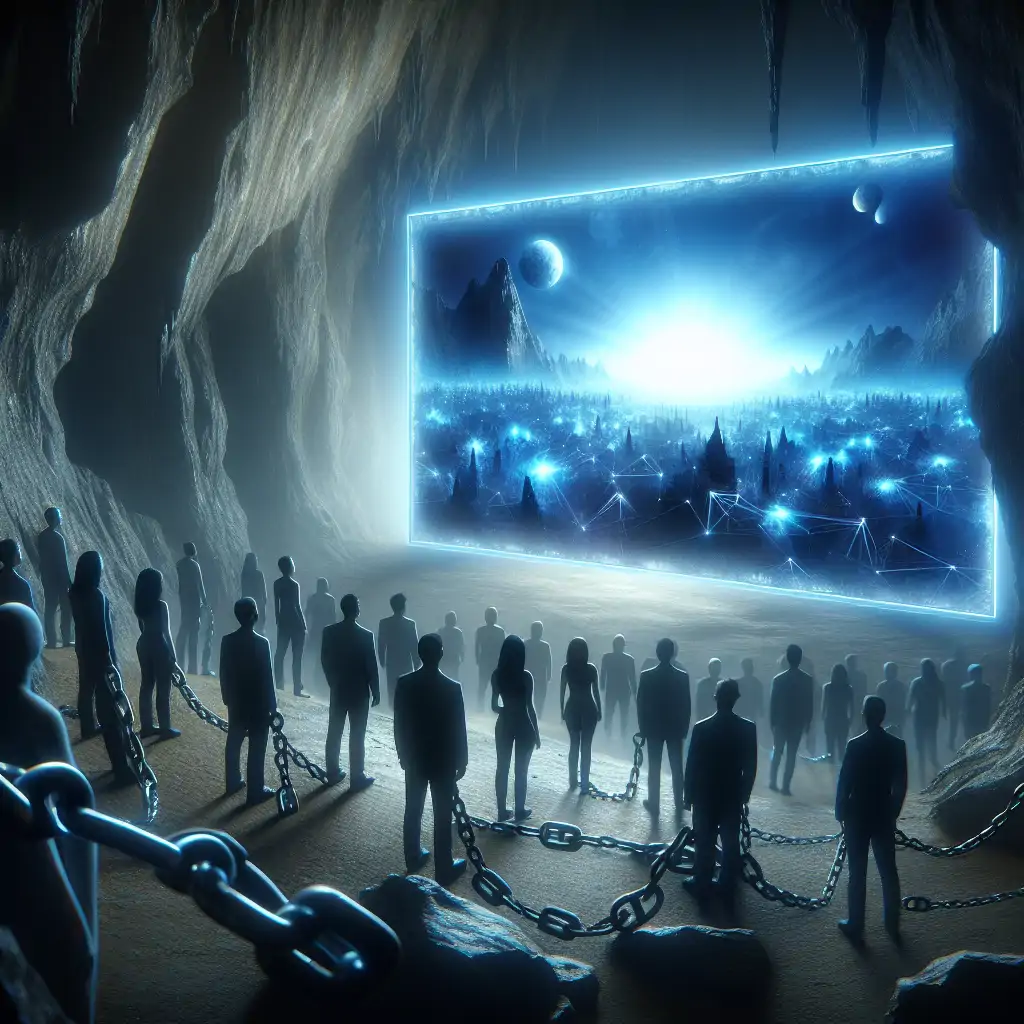
Close your eyes for a moment and imagine a dark cave. No, this isn't the beginning of a horror story or the setting of a new Netflix thriller. It's actually the backdrop for one of the most famous philosophical allegories of all time: Plato's Allegory of the Cave. Written thousands of years ago, this story describes prisoners chained in a cave, mistaking shadows on the wall for reality. But what if today, the cave walls are replaced by our high-definition screens and the shadows are our beloved binge-worthy series?
Welcome to a lighthearted yet profound exploration where ancient philosophy intersects with modern-day streaming habits. Are we all just couch-bound prisoners, captivated by the flickering images on our screens? And if so, what does our obsession with binge-watching say about our perception of reality? Buckle up because this journey will take us from ancient Athens to your living room, scrutinizing how our pursuit of knowledge and understanding has morphed over millennia.
Spoiler alert: This article won't ruin 'Stranger Things' or 'The Witcher', but it might just change the way you see your Netflix queue forever. Grab some popcorn (philosophical discussions pair well with snacks), and let's dive into the cave of binge-watching!

In the Allegory of the Cave, Plato describes prisoners who have been chained inside a dark cavern all their lives, their only perception of reality is the shadows projected on the wall by objects passing in front of a fire. These prisoners are unaware of the true forms of these objects. To them, the shadows are reality. Now, in our age of Netflix and chill, are we any different? Let’s take a closer look.
Imagine you're on your couch, binge-watching the latest season of your favorite show. Hours pass, and you're completely absorbed, emotionally invested in the characters, and oblivious to the world outside your window. The dramas, the romances, the plot twists—these are your shadows on the wall. They're so compelling that they begin to feel like a reality of their own.
But is this so bad? After all, our ancestors had different ways of distracting themselves from life's hardships. They told stories, wrote plays, or attended gladiator games. Today, our ‘cave’ just happens to be digital, and our ‘shadows’ are in 4K resolution. Are we truly prisoners, or are we simply participating in a new form of storytelling?
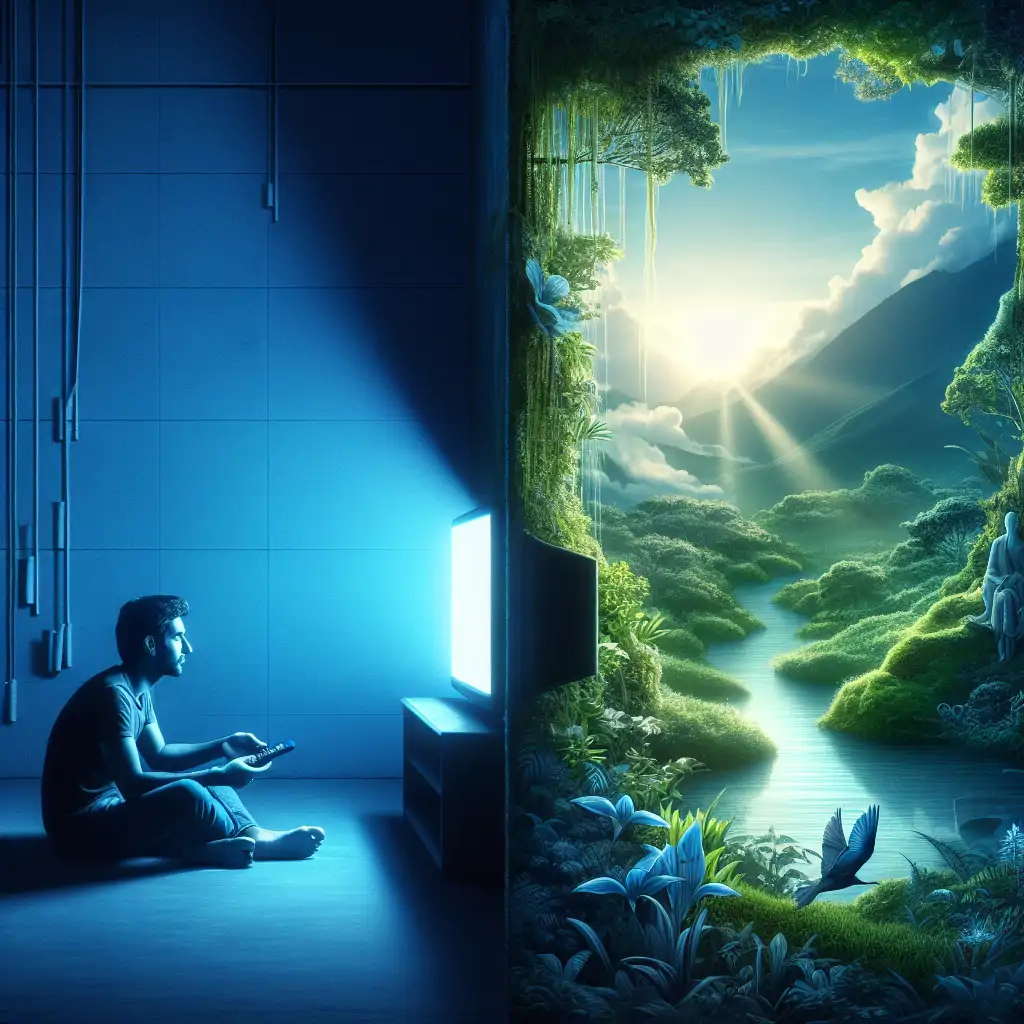
In the Allegory of the Cave, one prisoner escapes and discovers the outside world—a world illuminated by the sun, rich with color, texture, and depth. This newly liberated individual realizes that the shadows on the cave wall were mere illusions. Similarly, what happens when we put down the remote and step outside our ‘caves’? Do we find a more fulfilling reality, or are we just swapping one set of shadows for another?
While binging shows can provide temporary escape and joy, acknowledging the difference between these on-screen narratives and our real lives is paramount. Reality, with all its imperfections and unpredictability, is where true experiences, growth, and connections thrive. Plato encourages us to question and seek the truth, beyond the comforting glow of our TV screens.
So, next time you find yourself deep into a Netflix series, take a moment to reflect: Are these shows enhancing your understanding of the world, or are they just captivating shadows? Balance your time in the cave with adventures outside of it. You might discover that reality, despite its flaws, is far from being overrated.
Thanks for taking the time to read my article! You may also find this one interesting.
Kant vs. Cartman: Morality in the Age of MemesTil next time! Prijanka

Prijanka
Prijanka is a wellness coach and inspired blog writer. Drawing from her expertise in holistic health and her talent for motivating others, she writes insightful articles that empower readers to live healthier, more balanced lives, blending practical advice with a genuine passion for well-being.
A proud member of the B-Team
If you're curious to dive deeper into related topics, then you may find these external links useful.
1. Stanford Encyclopedia of Philosophy - Plato's Allegory of the Cave
An in-depth analysis of Plato's Allegory of the Cave, exploring its philosophical significance and relevance to understanding perception and reality.
https://interestingliterature.com/2023/03/plato-allegory-of-the-cave-summary-analysis/2. Impact of Binge-Watching on Mental Health
An article discussing the psychological effects of binge-watching television series, relevant to understanding modern 'digital caves' and their impact on viewers.
https://www.ncbi.nlm.nih.gov/pmc/articles/PMC9368441/3. Philosophy Now - Plato, Netflix, and the Pursuit of Knowledge
An exploration of how ancient philosophy like Plato's works can be applied to contemporary habits like binge-watching, enriching our understanding of reality and distraction.
https://philosophynow.org/issues/90/Plato_A_Theory_of_Forms4. History of Storytelling: From Oral Traditions to Netflix
A comprehensive look at the evolution of storytelling from ancient times to modern streaming services, relevant for understanding how narratives shape our perception.
https://literaturetimes.com/evolution-of-storytelling-from-oral-tradition-to-digital-age/5. Escaping the Digital Cave: Balancing Screen Time and Reality
A guide on finding a balance between consuming digital media and engaging with the real world, echoing the themes of liberation and reality from the Allegory of the Cave.
https://www.readingranch.com/digital-age-literacy-finding-balance-between-screen-time-and-reading/©2023 - 2026 SP Software Solutions Ltd. All rights reserved.