Descartes' Wi-Fi: I Think, Therefore I Buffer
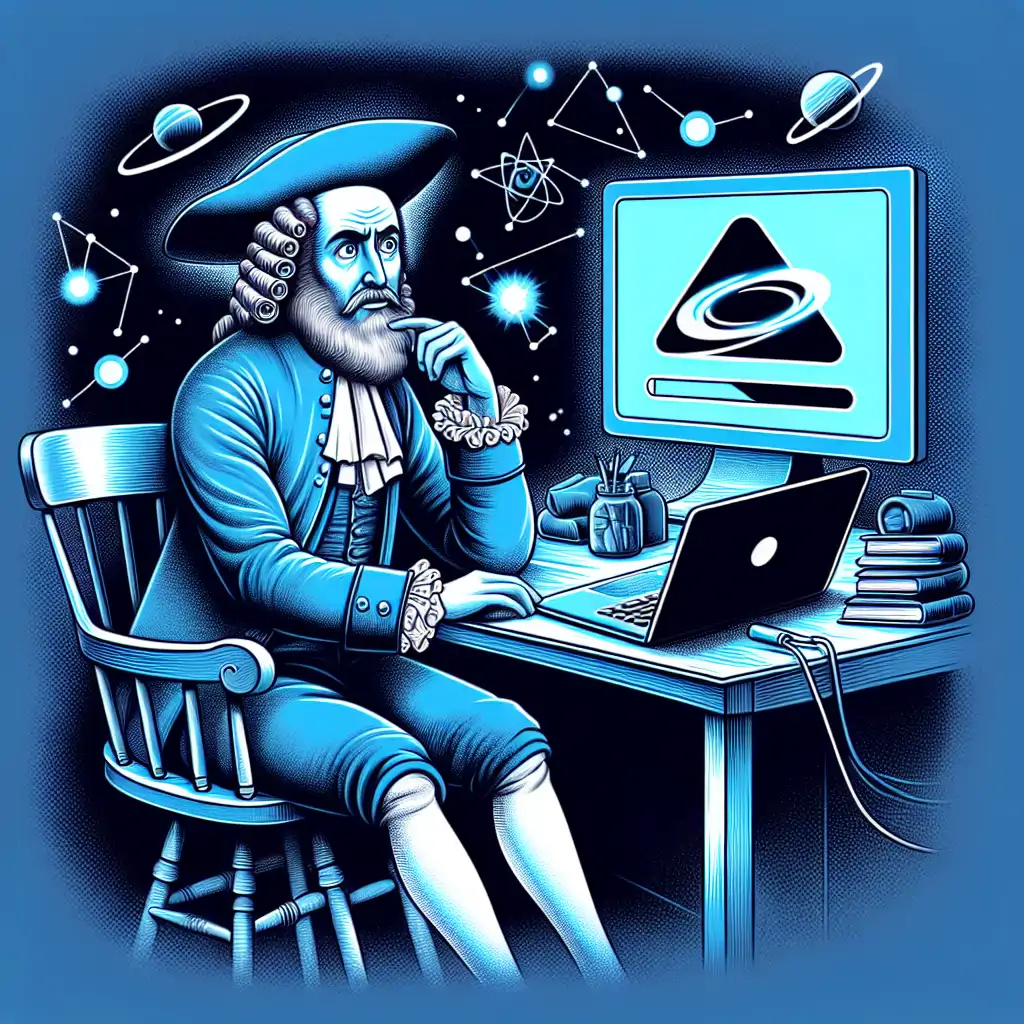
Have you ever stared at the spinning wheel of doom on your screen, cursing your Wi-Fi while questioning your very existence? You're not alone. In today's digital age, a dropped connection can feel like a mini existential crisis. But what if we told you that this modern-day frustration has its roots in 17th-century philosophy?
Picture this: René Descartes, the father of modern philosophy, suddenly finds himself in the 21st century. Instead of quill and parchment, he's armed with a sleek laptop and a Wi-Fi connection that's more temperamental than a philosopher in a bad mood. How would Descartes navigate the joys and pitfalls of our tech-infused lives?
In this whimsical exploration, we'll dive into the mind of Descartes and draw some fun—and surprisingly relevant—parallels between his age-old quest for certainty and our dependence on digital connectivity. Prepare to laugh, reflect, and perhaps even question your own digital existence as we delve into 'Descartes' Wi-Fi: I Think, Therefore I Buffer.'
Descartes' philosophical journey began with radical doubt. He questioned everything, from the reliability of his senses to the existence of the external world. Fast forward to today, and we’ve taken this skepticism to a new level—only now, it revolves around our Wi-Fi signal. 'Is it the router? The ISP? My laptop? Or is it...me?'
Descartes famously concluded, 'Cogito, ergo sum' — 'I think, therefore I am.' This statement was his bedrock of certainty amidst a sea of doubt. But in our digital era, it often feels more like 'I Buffer, Therefore I Am.' Each buffering wheel, each loading bar, forces us to confront the nature of our online existence. Are we truly 'present' if the page doesn't load? Can we 'be' if our Zoom meeting glitches?
One might argue that our reliance on technology has created a new form of thinking. Just as Descartes pondered his existence, we ponder our connection. We troubleshoot, we refresh, we reconnect, much like Descartes’ methodical approach to finding the truth. Our digital skepticism demands constant vigilance and critical thinking, reminiscent of the philosopher's quest for certainty.
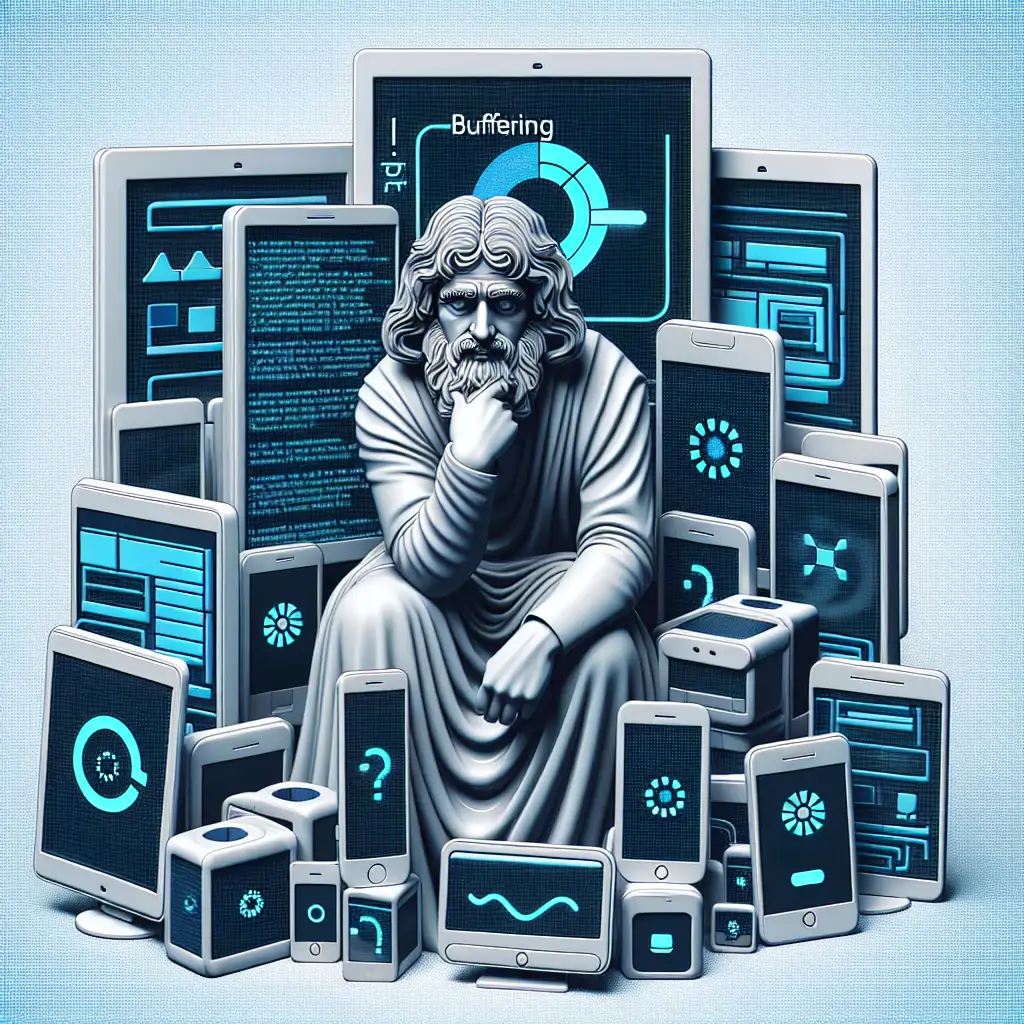
As we bridge the gap between the 17th and 21st centuries, it becomes clear that the essence of Descartes' skepticism lives on. Only now, it manifests as our digital woes. The quest for a stable internet connection, much like Descartes’ search for unassailable truths, is a testament to our enduring desire for certainty and control.
In a world where technology interweaves with our very sense of self, we must navigate the buffering wheels and loading bars with the same philosophical curiosity that Descartes applied to his musings. Every Wi-Fi hiccup is an opportunity to reflect on our dependence on technology and the modern modes of thinking it fosters.
So next time you find yourself staring at a spinning wheel, remember René Descartes. Channel your inner philosopher and ask not just why your Wi-Fi is failing, but what it means to be in a world where 'I think, therefore I buffer.' It might just turn a moment of frustration into a moment of profound insight.
Thanks for taking the time to read my article! You may also find this one interesting.
Socrates vs. Siri: Who Knows Best?Til next time! Prijanka

Prijanka
Prijanka is a wellness coach and inspired blog writer. Drawing from her expertise in holistic health and her talent for motivating others, she writes insightful articles that empower readers to live healthier, more balanced lives, blending practical advice with a genuine passion for well-being.
A proud member of the B-Team
If you're curious to dive deeper into related topics, then you may find these external links useful.
1. History of Wi-Fi
An exploration of the development of Wi-Fi technology, relevant for understanding our modern digital connectivity.
https://link.springer.com/article/10.1007/s10776-020-00501-82. René Descartes' Philosophy
An in-depth look at Descartes' philosophical contributions, helping to draw connections between his quest for certainty and our digital age.
https://www.britannica.com/biography/Rene-Descartes3. The Psychological Impact of Buffering
A study on how buffering and connectivity issues affect mental states, linking to how digital frustrations mirror existential concerns.
https://www.ncbi.nlm.nih.gov/pmc/articles/PMC7489103/4. Digital Skepticism in the Modern Era
An article examining how skepticism extends into our relationship with technology, similar to Descartes' philosophical skepticism.
https://www.tandfonline.com/doi/full/10.1080/0020174X.2022.21358775. Technology and Modern Existentialism
A discussion on how technology influences contemporary existential thought, relevant to the idea of 'I Buffer, Therefore I Am'.
https://www.researchgate.net/publication/364720974_Digitalism_the_modern_existentialism©2023 - 2026 SP Software Solutions Ltd. All rights reserved.