Socrates vs. Siri: Who Knows Best?
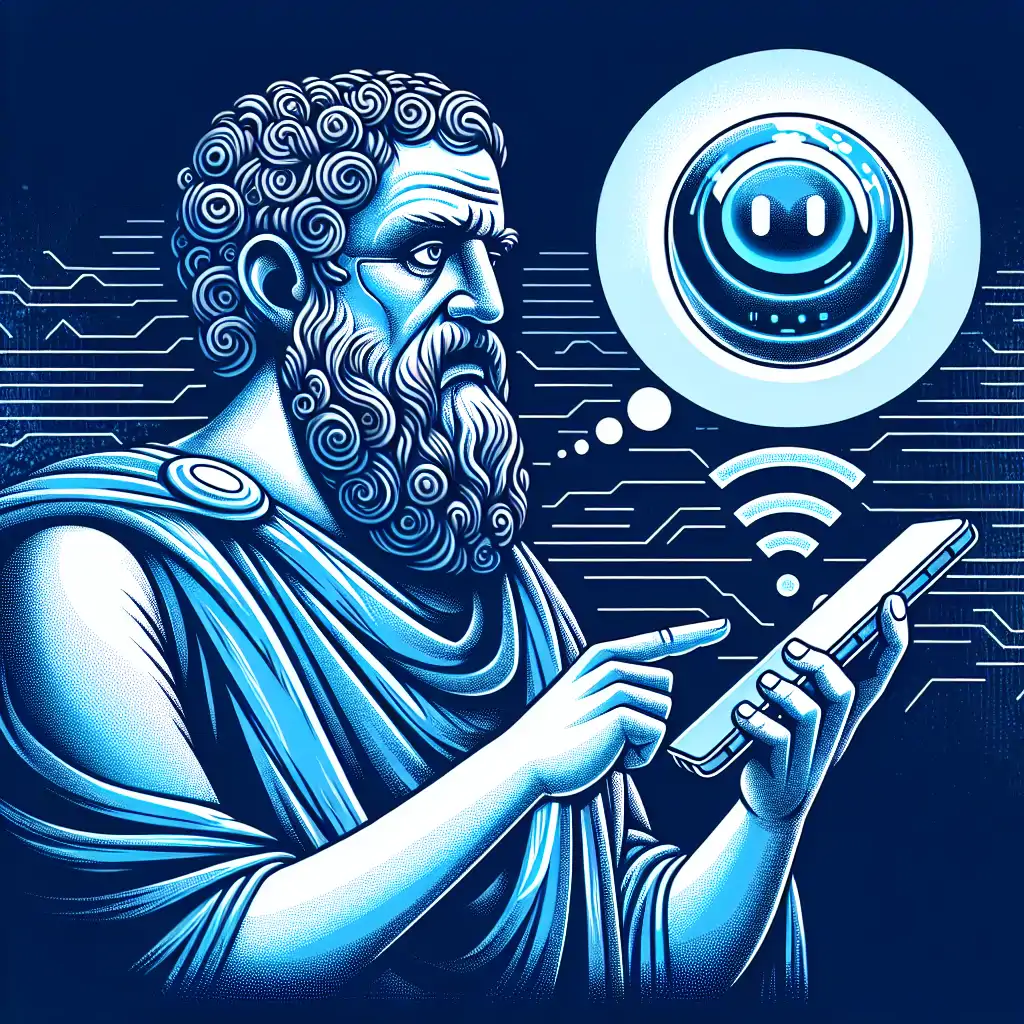
In the bustling agora of Athens stood a man with a mission—not to dispense wisdom, but to question everything. Fast forward a couple of millennia, and we have Siri, the AI assistant whose mission is quite the opposite: to answer every question. In an age where we can summon information with a simple 'Hey Siri,' how does this constant accessibility compare to the Socratic method of relentless questioning?
Today, we take a humorous and enlightening stroll through the philosophical playground of Socratic questioning versus modern-day instant knowledge. We'll explore whether our love affair with technology makes us wiser or merely more dependent. So, grab your thinking cap and perhaps your smartphone, and let’s delve into an ancient-meets-modern debate!
Prepare to chuckle, ponder, and maybe even question your next query to Siri. Let's get ready for an intellectual showdown of epic proportions: Socrates vs. Siri: Who Knows Best?

Picture Socrates—the bearded, barefoot philosopher strolling through ancient Athens, engaging in what seemed like never-ending dialogues. His method was simple: ask questions. Not just any questions but those that cut through the fabric of assumptions and societal norms, piercing directly into the heart of the matter. His aim wasn’t to lecture but to awaken a sense of awareness and critical thinking in his conversational partners.
Fast forward to today, and the majority of us don’t wander around marketplaces asking questions (although that would be quite the Instagram story). Instead, we ask our smartphones. 'What’s the capital of Bolivia?' 'How many ounces in a liter?' 'Why did my sourdough starter fail?' With just a 'Hey Siri,' we get instant gratification. But Socratic questioning wasn’t about quick answers; it was about deep, often uncomfortable, probing of our beliefs and knowledge.
Imagine Socrates quizzing someone about the essence of virtue while you're just trying to decide what to watch on Netflix. While Socrates might have considered the latter a distraction, Siri will readily provide you with a list of trending shows, complete with reviews and ratings. But is there a chance we’re missing out on the richness of a Socratic dialogue in our rush for efficiency?

We’ve taken a deep dive into the contrasting worlds of Socratic questioning and digital assistance. Socrates, with his relentless pursuit of wisdom, invites us to think deeper, question our assumptions, and engage in meaningful dialogues. Siri, on the other hand, provides instant answers—efficient but often surface-level, catering to our immediate needs rather than encouraging deeper thought.
While Siri excels in convenience and speed, it lacks the probing nature of the Socratic method that challenges our intellect and belief systems. Perhaps the real wisdom lies in a balance: using modern technology to access information while still engaging in the age-old practice of questioning and critical thinking.
So, the next time you're about to ask Siri for an answer, take a moment to channel your inner Socrates. Ask yourself, 'Is this the right question?' and 'What deeper understanding can I uncover?' In the end, both Socrates and Siri have their place—they just serve vastly different purposes in our quest for knowledge.
Thanks for taking the time to read my article! You may also find this one interesting.
Epicurus' Garden & Modern Mindfulness: Zen or Zoom?Til next time! Prijanka

Prijanka
Prijanka is a wellness coach and inspired blog writer. Drawing from her expertise in holistic health and her talent for motivating others, she writes insightful articles that empower readers to live healthier, more balanced lives, blending practical advice with a genuine passion for well-being.
A proud member of the B-Team
If you're curious to dive deeper into related topics, then you may find these external links useful.
1. The Socratic Method
An explanation of the Socratic method on Philosophy Basics, detailing its historical significance and how it fosters critical thinking, relevant to understanding the contrast with modern digital assistance.
https://www.britannica.com/topic/Socratic-method2. History of AI Assistants
An article on the evolution of AI assistants like Siri, discussing their features and impact on how we access information, relevant to the discussion about digital convenience.
https://megasisnetwork.medium.com/the-evolution-of-ai-powered-personal-assistants-a-comprehensive-guide-to-siri-alexa-and-google-f2227172051e3. Impact of Technology on Critical Thinking
A research study from a reputable source analyzing how technology affects our thinking and decision-making processes, relevant to exploring if tech makes us wiser or more dependent.
https://www.sciencedirect.com/science/article/pii/S24058440230414154. Socratic Dialogue Examples
A resource providing examples of Socratic dialogue, illustrating how the method operates and its effectiveness in promoting thoughtful discussions, pertinent to the comparison with Siri.
https://www.thoughtco.com/socratic-dialogue-argumentation-16919725. Balancing Technology and Philosophy
An opinion piece discussing the importance of balancing modern technological solutions with philosophical approaches, highlighting the need for both in our quest for knowledge.
https://link.springer.com/article/10.1007/s42438-021-00249-1©2023 - 2026 SP Software Solutions Ltd. All rights reserved.